
Life After 8th Grade: NSWS Alumni Share Their High School Stories
What really happens after 8th grade? For many students at Nevada Sage Waldorf School, that question brings up feelings of excitement, curiosity, and maybe a bit of nervousness. The transition to high school—especially one that’s very different from our Waldorf environment—can feel like a huge step. Will I be ready academically? Will I find friends? Will I still feel like myself?
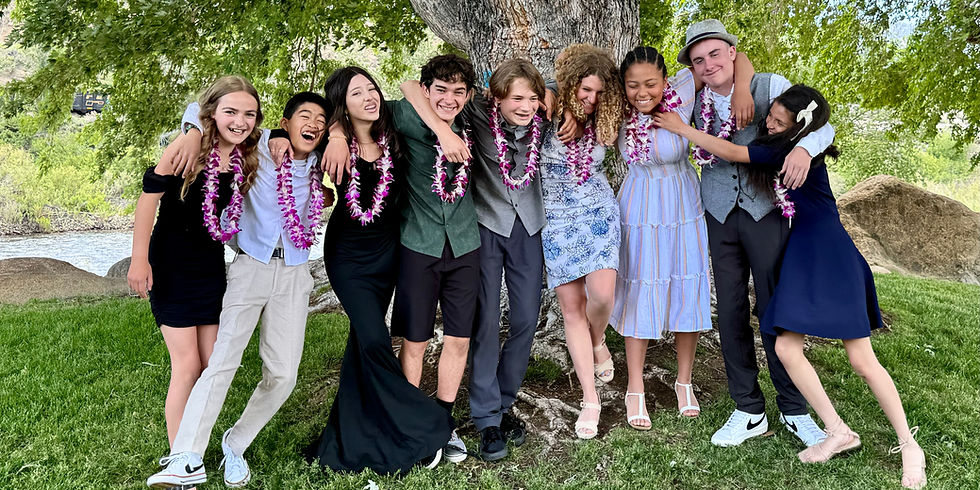
To explore these questions, we spoke to three NSWS alumni—Raine, Miles, and Galen—who each took a different path after graduating. Raine is a freshman at High Mowing School, a Waldorf boarding school in New Hampshire. Miles is a freshman at Damonte Ranch High School here in Reno, and Galen, now a senior, is attending that same public high school.
Each of them had a unique journey, but they all shared one thing in common: they were more prepared than they expected.
Starting a New Journey
After graduating from 8th grade, Raine packed her bags and headed across the country to a boarding school nestled in the woods of New Hampshire. She wasn’t sure what to expect, but she quickly found comfort in her new surroundings. She lucked out with her roommate, who became a close friend, and was relieved to find a structure and rhythm to the school day that felt familiar. What really drew her in, though, was the circus program. “I thought it was cool,” she said, “and once I tried the intro class, I knew I wanted to be part of it.” She also joined volleyball and found joy in staying active throughout the day.
Miles took a very different route, enrolling at Damonte Ranch High School for its strong theater program. A passionate performer, he felt drawn to the school’s opportunities to explore acting and stagecraft. While the size and atmosphere of public high school felt different at first, he quickly adjusted. “It only took a couple of days to get into the flow,” he said. Galen, who also attended Damonte Ranch, admitted that the transition was easier than he had anticipated. “Academically, I felt well prepared,” he said. “The workload was even less than I expected.”
Making Friends and Finding Community
Socially, each student faced their own set of challenges, but they all found their footing in different ways. Raine was nervous about starting fresh at a new school, especially one so far from home. But that fear faded quickly thanks to a camping trip during the first week of school. The shared Waldorf background of her classmates created an instant bond. “We all had similar experiences growing up, and that helped us connect right away,” she said.
Miles noticed the difference in social dynamics almost immediately. After being with the same group of classmates for most of his life, he suddenly found himself in a sea of unfamiliar faces. Many students already knew each other from public middle schools, but he leaned into the challenge. “I just started talking to people in my classes,” he said. “I made an effort.” Galen had a unique experience entering high school during the COVID pandemic. With everyone wearing masks, social connection was difficult at first. But as restrictions eased, he found that friendships formed naturally. “I’m not a super outgoing person,” he admitted, “but it was impossible not to make friends. There are just so many people.”
Feeling Prepared: Social Skills That Carried Over
Each of them reflected on how their time at NSWS shaped their ability to connect with others. Raine, an introvert, said growing up in a close-knit class gave her a strong sense of what healthy friendships look like, which helped her choose the right people to surround herself with at her new school. Miles credited his time at NSWS for helping him feel comfortable speaking to teachers and peers. “Assemblies and presenting in front of the class taught me how to talk to people without getting nervous,” he said. Galen agreed. “I felt socially well prepared,” he said. “Waldorf helped me develop confidence and independence.”
Academic Adjustments
Academically, the transition was marked by both challenges and triumphs. Raine found high school to be harder, but not overwhelming. “Math was difficult in middle school and it’s still difficult,” she said with a laugh. Still, she’s thriving with straight A’s and feels at ease with the block schedule and main lesson rhythm. Miles noticed a stark contrast in teaching styles. “At NSWS, things are explained and experienced. Now it’s more like: memorize this formula,” he said. Despite the shift, he adapted well and is doing great in his classes. For Galen, high school brought more tests but less stress. “Compared to my peers, I’m a lot better at getting my work done on time,” he said. “I often don’t have much homework.”
When asked what specific skills they took from NSWS into high school, their answers pointed to more than just academics. Raine said she had learned how to plan ahead and manage her time—something that helped her adjust to the increased workload. She also mentioned that resolving conflicts with classmates was a skill she carried with her. Miles appreciated the well-roundedness of his Waldorf education, noting how subjects like mythology helped expand his perspective. Galen emphasized the independence that was fostered at NSWS. “A lot of my classmates rely on constant feedback from teachers,” he said. “I learned how to work on my own.”
Finding Their Passions
Extracurriculars helped each student feel more rooted in their new schools. Raine’s involvement in the circus program gave her a creative outlet and a physical challenge. “It’s part of the school day and after school,” she said. “It’s a big part of my life.” She also joined volleyball as part of the boarding requirement to participate in more activities. Miles is immersed in his classes and plans to take on even more next year. He’s also considering joining clubs or football as a sophomore. Galen found his place in music, joining the symphony orchestra as a freshman and continuing to perform high-level pieces throughout high school.
The Hardest Parts: Challenges Along the Way
Of course, no transition is without its challenges. For Raine, the hardest part was letting go of the familiar. “I was scared I wouldn’t connect with people,” she said. “And it was a big decision not to just follow my friends from middle school.” Miles said the homework load and starting over socially were tough at first, but he trusted the foundation he had built. “I knew what a healthy friendship felt like, so I knew how to find it again,” he said. Galen’s biggest challenge wasn’t the school itself—it was the worry beforehand. “I built it up in my head,” he said. “But once it started, it felt easy.”
Celebrating the Wins: What They Loved Most
When asked about the most rewarding part of their transition, each student lit up. Raine said it was the friendships she had made and the joy of joining circus. Miles appreciated the diversity and hearing the different life stories of his new classmates. Galen said the best part was proving to himself that he was ready. “Meeting new people and knowing that Waldorf prepared me well—that felt good.”
Words of Wisdom: Advice to Future 8th Graders
If they could go back and give advice to their 8th-grade selves, each of them would offer a similar message: it’s not as scary as you think. Raine would tell students to get ready for more homework and learn how to manage time. “Everyone who left NSWS is doing well,” she said. Miles encouraged students not to shy away from challenges. “Take honors or AP classes. Talk to your teachers. You’ll be okay,” he said. Galen echoed both of them: “Don’t worry. The transition isn’t as bad as you think.”
Looking back, none of them would change much. Raine might have chosen a more challenging 8th grade project, but beyond that, she’s grateful for her path. Miles said he wouldn’t change a thing. “Being comfortable with people is such an important part of life,” he said. “NSWS really helped me with that.” Galen agreed. “Waldorf prepared me both academically and socially. I feel like I have stronger reasoning skills, and I see the world differently.”
Their journeys are proof that while the transition to high school may feel big, NSWS students are equipped with the tools they need to succeed—both in the classroom and beyond. Whether they’re joining a circus, starring in a play, or performing in an orchestra, our graduates are out in the world, finding their place and thriving.


Comments